Phase 01
Discover & Prioritize
Identify workflows where AI can materially improve speed, decision quality, labor efficiency, revenue, customer service, or operational resilience. Separate high-value opportunities from low-value AI experiments.
Xstreamline helps operational businesses identify high-value AI opportunities, redesign workflows around humans and AI agents, connect intelligence securely to existing systems, and deploy governed AI solutions that create measurable business value.
Keep the systems that run your business. Redesign the work around them.
Governed AI workflow
Context · rules · evaluation · exception handling
Human approval
Approved action
Exception path
Individual productivity and assistance.
AI embedded into specific tasks and decisions.
AI can use tools, systems, and business context to execute multi-step work within defined controls.
Humans and AI are intentionally combined across complete business workflows.
AI-first does not mean using AI everywhere. It means designing work with people, AI, conventional software, and automation all available, then choosing the right executor for each step.
Phase 01
Identify workflows where AI can materially improve speed, decision quality, labor efficiency, revenue, customer service, or operational resilience. Separate high-value opportunities from low-value AI experiments.
Phase 02
Map the current workflow and determine what should remain human-led, what should be AI-assisted, what can be automated, and where agents can act safely within defined boundaries.
Phase 03
Engineer AI applications, workflow agents, orchestration, APIs, and secure connections to the enterprise systems and data required to perform real work.
Phase 04
Add permissions, approvals, evaluation, observability, exception handling, cost controls, and reusable architecture so successful workflows can expand safely.
Natural-language access to business knowledge, data, and approved enterprise tools.
Classification, extraction, analysis, routing, and repetitive actions enhanced by AI.
Agents that execute multi-step business processes using tools, rules, enterprise context, and escalation paths.
Specialized agents coordinating when the workflow genuinely benefits from separate responsibilities, validation, or parallel work.
Controlled AI access to ERP, CRM, databases, email, documents, APIs, and custom applications.
Purpose-built business software where AI is embedded directly into the user's operational workflow.
Enterprise systems
ERP & CRM
Databases & APIs
Email & documents
Custom applications
Controlled integration
Identity & permissions
Approved capabilities
Business rules
Logging & evaluation
Operational workflow
Assist & recommend
Prepare work
Request approval
Act or escalate
AI researches, summarizes, recommends, drafts, or prepares work while a person remains the decision-maker.
Human decides
An agent prepares or initiates an action, but a person approves consequential steps before execution.
Human approves
An agent can complete defined routine actions autonomously and escalates exceptions, uncertainty, or policy boundaries to a person.
Human supervises
The right level of autonomy depends on the workflow, risk, data, business rules, and cost of failure. Xstreamline designs those boundaries explicitly instead of treating autonomy as an all-or-nothing decision.
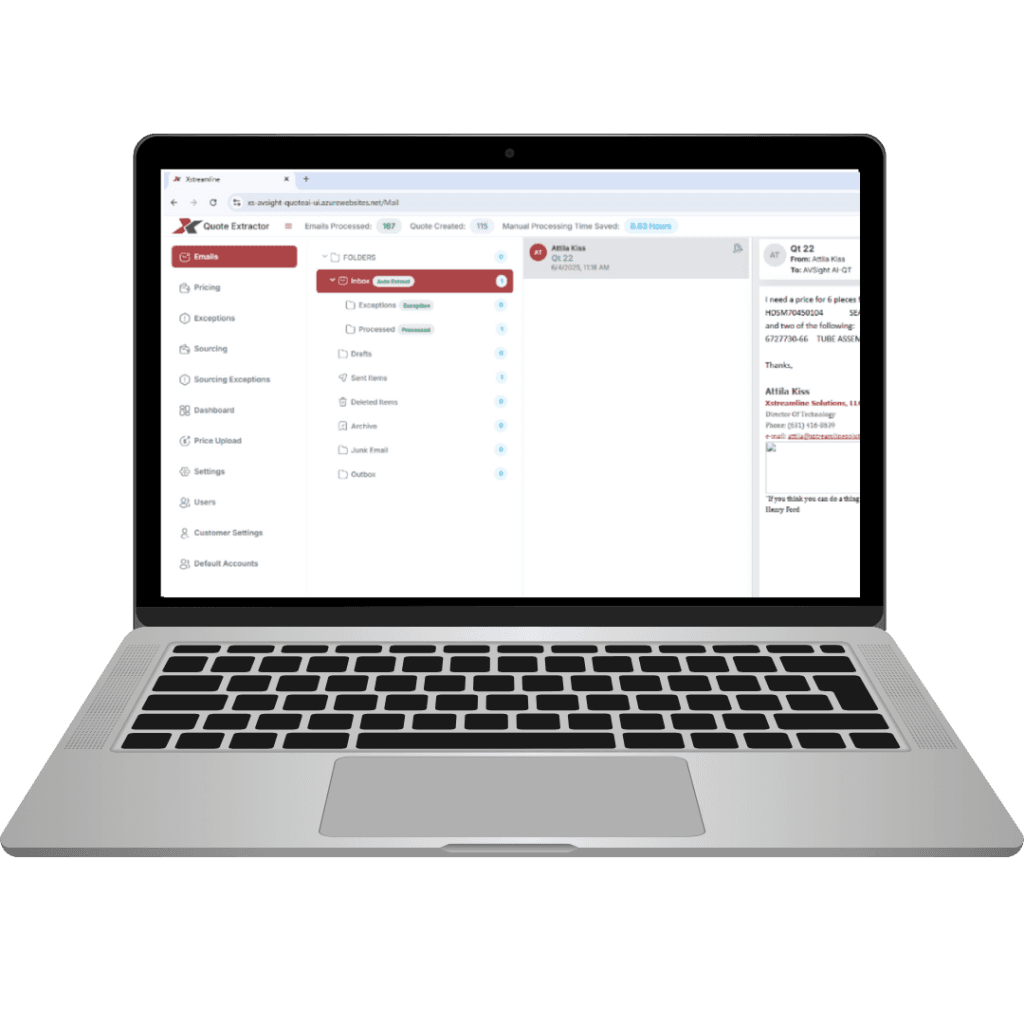
XS BOLT demonstrates how AI, business rules, enterprise data, and human exception handling can be combined into an operational workflow that starts in email and works directly with the ERP.
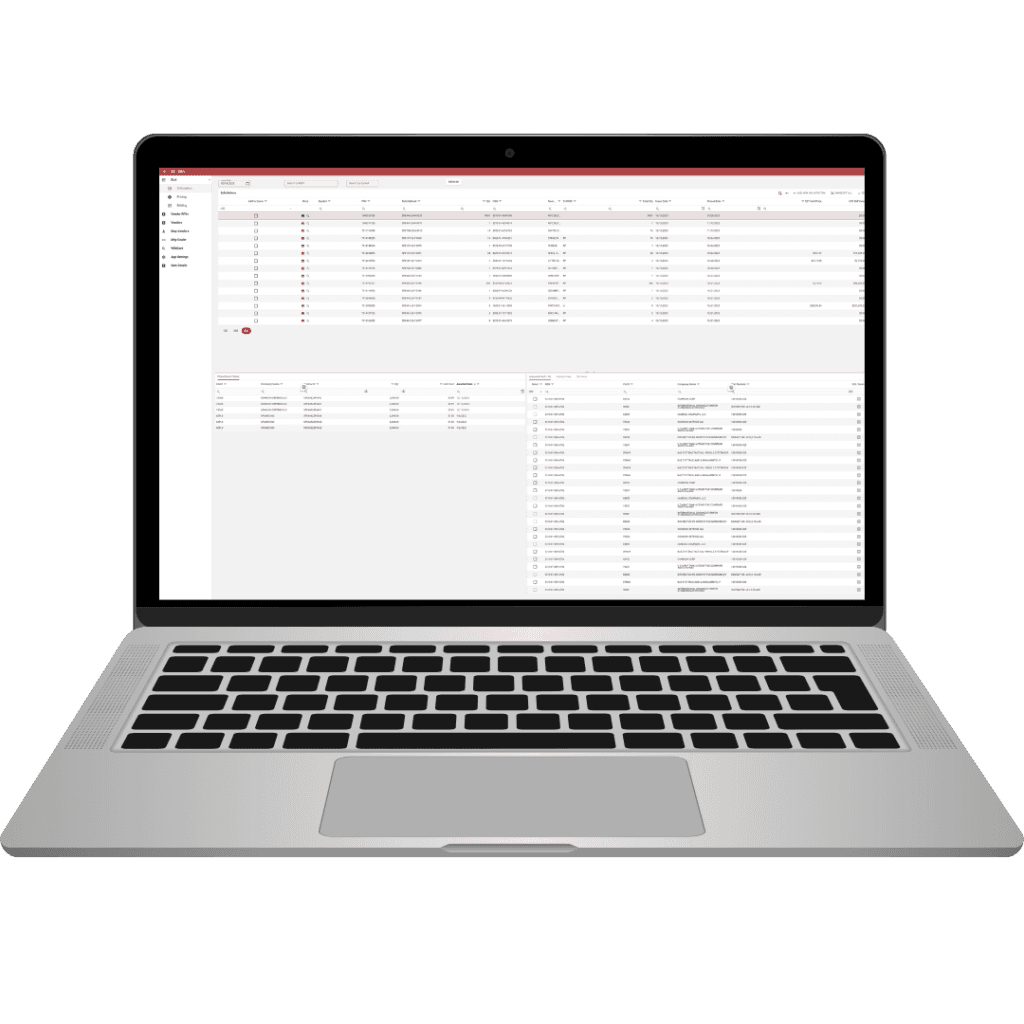
GBA demonstrates Xstreamline's ability to connect external opportunity sources, internal business data, workflow logic, and controlled execution into one operational system.
Select a high-value workflow and define the business outcome.
Map the future workflow, systems, data, agent/human responsibilities, controls, and success measures.
Build a narrow production-capable implementation, validate value, then expand only where the evidence supports it.
Bring us a workflow, bottleneck, or business objective. We'll help determine whether AI assistance, automation, an agent, conventional software, or a combination is the right answer.